FARADataInformS


Agroecology Transitions: Building Capacity for Africa’s Food Systems Transformation
Submitted by gquansah on Fri, 19/09/2025 - 18:12
Nairobi, Kenya – September 2025
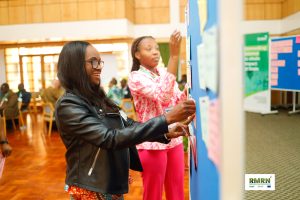
From 8–13 September 2025, the Regional Multi-Actor Research Network (RMRN) Project, funded by the European Commission with technical support from the Joint Research Center (JRC), organized an Agroecology Training Workshop in collaboration with the Agroecology Transformative Partnership Platform (AE-TPP). The workshop brought together researchers, partners, and stakeholders from across Africa to strengthen capacity in agroecological transition, research and innovation. The training combined two days of virtual sessions with two days of in-person learning at the CIFOR-ICRAF Campus in Nairobi, Kenya.
Participants engaged in sessions on the principles and approaches of agroecology as well as tools for assessing agroecology transitions. The training also covered systems thinking, participatory research methodologies, and science-policy linkages, equipping participants with the knowledge needed to design and implement innovations that can transform Africa’s food systems.
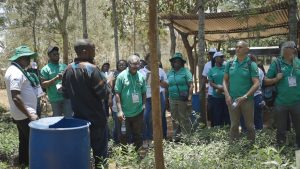
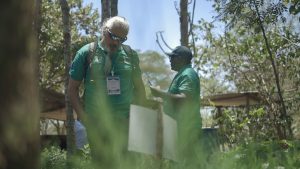
A major highlight was a field visit to the Drylands Natural Resource Center (DNRC) in Kalimani, Nairobi, where participants observed firsthand, how agroecological principles are transforming dryland farming systems. The visit showcased community-led agroforestry, soil regeneration, and sustainable livelihoods, offering practical lessons on restoring degraded landscapes and improving food security and resilience.
Participants at the DNRC during the field visit
Founded and led by Kenyan national Nicholas M. Syano, DNRC is a locally registered NGO working with more than 1,000 smallholder farmers to promote sustainable dryland resource management and agroecological farming practices. Reflecting on the visit, Mr. Syano said: “We are honoured to host the RMRN team at DNRC. ” Their insights and suggestions are valuable in helping us improve our work and expand opportunities for research collaboration. This kind of engagement is vital for advancing agroecology principles and scaling sustainable solutions across dryland regions.”
Dr. Florence Nakayiwa, Deputy Executive Secretary for Planning, Resources, Mobilisation and Management at RUFORUM, emphasized the importance of blending theory with practice: “This training has been an important step in building capacity for agroecological transitions. The blend of theoretical concepts with the practical field visit to DNRC allowed participants to see agroecology in action, moving beyond abstract principles to real solutions that work for communities. This approach is vital for strengthening advocacy and driving agroecology transitions at scale across the continent. RUFORUM remains committed to working with partners to ensure that these lessons translate into stronger policies, investments, and partnerships for sustainable food systems.”
 Dr. Kwaku Antwi, Coordinator of the RMRN Project at FARA, underscored the networks’ commitment to advancing agroecology: “The RMRNs are fully committed to advancing agroecological transitions across Africa. Through collaboration and knowledge sharing, we aim to ensure that agroecology contributes to food systems transformation. This training has shown us what is possible when science, practice, and policy come together, and we will continue working with partners to scale these efforts for the benefit of farmers and communities.”
The workshop also fostered peer learning and collaboration among participants; laying the groundwork for stronger partnerships and policy advocacy towards advancing agroecology across the continent.
By: Daniel Obloni Kweitsu, Communications Expert, FARA
The post Agroecology Transitions: Building Capacity for Africa’s Food Systems Transformation appeared first on FARA Africa.